How to choose a standing desk for home office UK is a question many people start asking after spending long hours sitting at a desk that simply doesn’t support how they actually work.
On paper, most standing desks look similar. They all adjust height, they all claim stability, and they all promise better comfort. But in real UK home setups — especially smaller spaces, shared rooms, or multi-device environments — the difference becomes obvious very quickly.
This guide breaks down how to choose a standing desk for home office UK based on real daily use, not just specs. The goal is simple: help you avoid the common mistakes and choose something that actually feels right every day.
As an Amazon Associate I earn from qualifying purchases.
📌 Contents
- Why standing desks matter in UK homes
- What most buyers overlook
- Common mistakes people make ⚠️
- How to choose a standing desk for home office UK
- Real-life use cases
- Who this type of desk is best for
- When this is NOT the right choice
- Final recommendation 🧠
Why standing desks matter in UK homes
In many UK homes, space is limited and work setups are often built around convenience rather than long-term comfort. That’s where a standing desk becomes more than just a “nice upgrade”.
It allows you to switch positions throughout the day without interrupting your workflow. Instead of staying locked into one posture, you gain flexibility — which is what actually improves comfort over time.
For people working from home daily, this flexibility is not a luxury. It becomes part of how the workspace functions.

What most buyers overlook
Many buyers assume that choosing a standing desk is mainly about height adjustment. In reality, that’s only one part of the experience.
In UK homes with multiple devices, WiFi routers nearby, and limited desk space, what matters more is how stable the desk feels, how smooth the adjustment is, and whether it fits into your daily routine without friction.
If you’re trying to understand how to choose a standing desk for home office UK properly, you need to look beyond basic specs and think about daily usability.
Common mistakes people make ⚠️
- Choosing the cheapest option without checking frame stability
- Ignoring how much height range they actually need
- Overlooking motor noise in quiet home environments
- Not thinking about cable organisation
- Assuming all desks feel the same at maximum height
These mistakes don’t show up on day one — they show up after weeks of use.
How to choose a standing desk for home office UK
1. Height range that fits your real setup
A useful desk should allow a comfortable transition between sitting and standing. A range around 72–120 cm is practical for most users, covering both working positions without awkward adjustments.
2. Stability at full height
This is one of the biggest differences between desks. A strong frame, often built with steel support, helps maintain stability even when the desk is fully extended.
3. Smooth and quiet adjustment
In a home office, noise matters more than people expect. A quiet motor allows you to adjust the desk without disrupting your environment, especially during calls or focused work.
4. Memory height settings
Saving preferred heights makes daily use much easier. Instead of adjusting manually each time, you switch instantly between positions.
5. Built-in safety features
Some desks include safety mechanisms that stop movement if an obstacle is detected. This reduces risk during adjustment, especially in tighter spaces.
6. Cable management
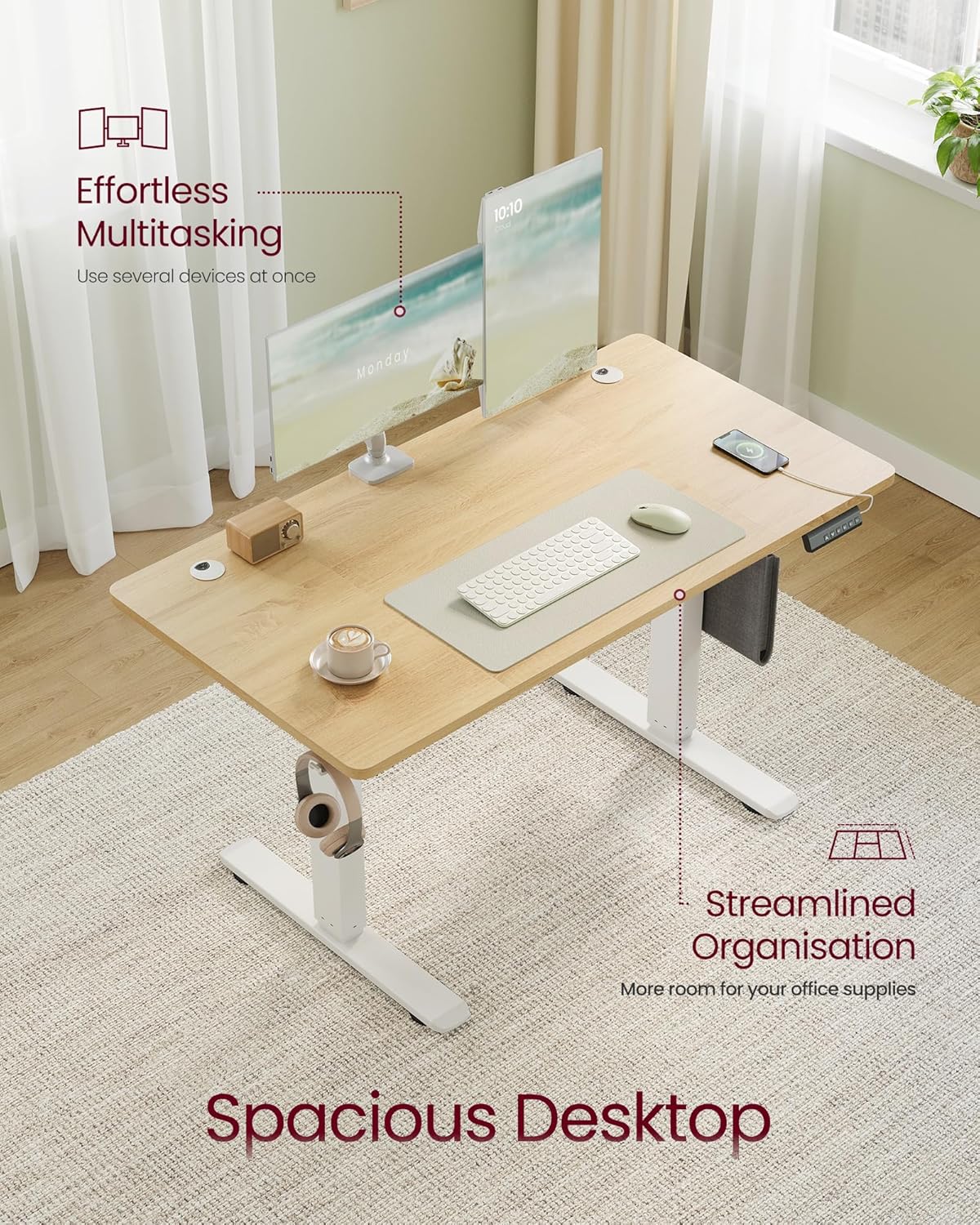
A clean workspace is easier to maintain when cables are properly routed. Desks with built-in cable holes or routing systems help keep everything organised.
7. Practical daily features
Small additions like integrated USB-C charging can simplify your setup and reduce the need for extra accessories on your desk.

Real-life use cases
- Switching positions during long work sessions
- Adapting a desk for different users in the same home
- Creating a flexible workspace in limited space
- Improving comfort during extended screen time
Who this type of desk is best for
- Remote workers with full-time desk setups
- People improving their workspace for daily comfort
- Users who prefer flexible working positions
- Anyone upgrading from a fixed desk
When this is NOT the right choice
Standing desks are not necessary for every situation. If your work is occasional or short-term, a traditional desk may be more practical.
They are most valuable when used consistently as part of a daily routine.
Final recommendation 🧠
Choosing the right desk comes down to how it feels to use every day — not how it looks on a product page.
If you understand how to choose a standing desk for home office UK based on stability, usability, and real working habits, you will make a much better decision.
For most setups, a well-built adjustable desk with smooth movement and practical features is more than enough to create a comfortable and reliable workspace.
As an Amazon Associate I earn from qualifying purchases.


